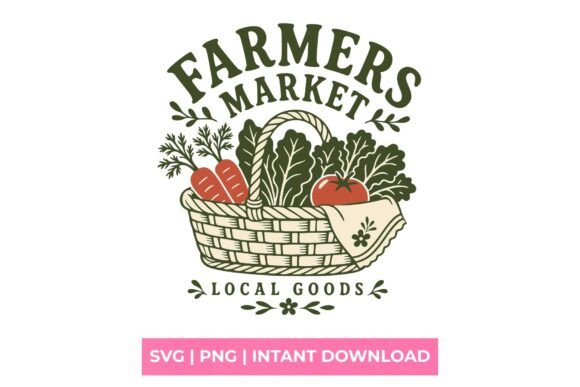
Reviewing Farmers Market Local Goods SVG for Embroidery
As a designer who spends more time staring at stitch simulations than I do sleeping, I have learned that not every digital file translates well to thread. We live in an era where T-Shirt Designs and Graphics are abundant, but finding a file that respects the limitations of embroidery machinery is rare. Recently, I downloaded the Farmers Market Local Goods SVG to test its viability for a client’s spring collection. What follows is my honest assessment of how this design performs when moved from the screen to the hoop.
First Impressions: Mood and Visual Personality
The first thing that strikes you about the Farmers Market Local Goods SVG is its rustic charm. It does not scream for attention with neon brightness or overly complex gradients. Instead, it offers a grounded, organic feel that aligns perfectly with the current trend toward slow living and handmade authenticity. The layout is balanced, with a clear hierarchy that guides the eye naturally. For an embroidery project, this is crucial. A cluttered design often results in a muddy finished product, but here, the spacing allows each element to breathe.
The theme evokes nostalgia. It feels like something you would see on a canvas tote at a weekend market or stitched onto the apron of a local baker. This visual personality makes it versatile. It is not just a graphic; it is a mood setter. When I loaded the file into my digitizing software to preview the stitch path, I noticed the lines were clean. This suggests that the vector paths are well-constructed, which is the foundation of any good machine embroidery design.
Real-World Application: The Tote Bag Test
To truly evaluate the Farmers Market Local Goods SVG, I needed a real-world scenario. I chose a heavy-weight canvas tote bag, a staple for any Etsy seller or craft business. Canvas provides a stable base, minimizing the risk of puckering, which is ideal for testing new designs. I selected a natural beige fabric to let the thread colors pop without overwhelming the viewer.
The stitching process revealed the design’s strengths. The larger elements, likely intended for fill stitch areas, covered the fabric evenly. There were no visible gaps or excessive pull, indicating that the stitch density was appropriate for medium-weight fabrics. The text, if included in your specific version of the file, remained legible. This is often where designs fail; tiny lettering can turn into an unreadable blob of thread. However, this design seemed to account for the thickness of embroidery floss, maintaining clarity even at a moderate size.
For those creating a personalized gift or a small shop product, this level of clarity builds customer trust. A sloppy stitch job can ruin the perceived value of a handmade product, but a clean execution elevates it. The Farmers Market Local Goods SVG lends itself well to this standard of quality.
Versatility Across Products
While the tote bag was a success, I considered other applications. This design is not limited to bags. It would work beautifully as sweatshirt embroidery, provided you use a proper stabilizer to handle the stretch of the knit fabric. The rustic aesthetic pairs well with heather grey or oatmeal-colored garments, creating a cozy, artisanal look.
For custom apparel like denim jackets or chambray shirts, the design holds up well. The contrast between the thread and the fabric texture adds depth. If you are an embroidered patch maker, this SVG could be scaled down effectively, though you must check the smallest details. Tiny leaves or intricate borders might need simplification if you are working with a small hoop size, such as a 4x4 inch frame.
I also envision this being used for holiday embroidery projects, particularly for Earth Day or harvest-themed gifts. It fits seamlessly into the narrative of sustainability and local support. For baby embroidery, however, caution is advised. Ensure that any small detachable parts are secured tightly, and avoid dense stitching on delicate baby skins. Softness is key, so consider using softer threads and lighter stabilizers.
Technical Considerations and Challenges
No design is perfect for every situation. When working with the Farmers Market Local Goods SVG, there are areas where you must exercise caution. If you plan to stitch on thin fabric or stretchy fabric without adequate stabilization, you risk distortion. The design’s integrity relies on precise alignment, so pulling fabric can ruin the symmetry.
Another consideration is dark fabric. If you are stitching on black or navy, you must choose high-contrast thread colors. Pastels may get lost, reducing the impact of the design. I recommend running a test on scrap fabric first. This allows you to adjust tension and check for any thread breaks, especially in corners or tight curves.
For curved surfaces like caps, the design needs to be centered carefully. The arch of the cap can distort horizontal lines. You may need to adjust the placement or slightly alter the digitizing to compensate for the curve. Additionally, if the design includes fine lines intended for running stitch, ensure your machine is calibrated correctly. Loose tension can make these lines look shaky rather than intentional.
Enhancing Brand Value and Customer Engagement
From a business perspective, the Farmers Market Local Goods SVG is a strong asset. It helps maintain brand consistency for shops focused on eco-friendly or artisanal goods. When customers see a well-executed design, they perceive higher value. This translates to better buyer engagement and potentially higher price points.
Using this design in your printable mockup previews can also boost sales. High-quality images of the finished product help customers visualize the item in their lives. Whether it is a kitchen towel or a pillow cover, the visual appeal of the design drives interest. It is not just about the stitch; it is about the story the product tells.
Practical Designer Notes
Before you commit to a large production run, keep these tips in mind:
- Test on Scrap Fabric: Always stitch a sample to check tension and density.
- Check Thread Contrast: Ensure your thread colors stand out against the fabric background.
- Review Stitch Density: If the design feels too stiff, reduce the density in your digitizing software.
- Confirm Hoop Size: Make sure the design fits within your machine’s maximum hoop area.
- Inspect Small Details: Zoom in to ensure tiny elements will stitch out cleanly.
- Use Proper Stabilizer: Match the stabilizer to your fabric type (cut-away for knits, tear-away for wovens).
- Verify Licensing: Confirm whether the license allows for commercial use if you plan to sell finished items.
The Farmers Market Local Goods SVG is a robust choice for designers who value quality and versatility. It bridges the gap between digital convenience and tactile craftsmanship. By understanding its strengths and limitations, you can create products that resonate with customers and stand the test of time. Whether you are a hobbyist or a seasoned professional, this design offers a solid foundation for your next creative endeavor.