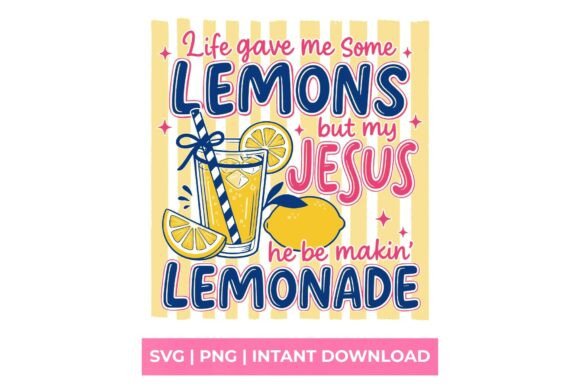
Reviewing the Lemon & Jesus Design for Real Stitch-Outs
As a designer who spends more time staring at stitch simulations than I do sleeping, I have learned to be skeptical of cute slogans. The market is flooded with text-heavy graphics that look fantastic on a screen but turn into a tangled mess under the needle. That is why I took a close, critical look at Life Gave Me Some Lemons but My Jesus Ma before committing it to any client project. This isn’t just about whether the phrase is catchy; it is about whether this machine embroidery design holds up when translated from pixels to thread.
The first impression of this piece is its playful juxtaposition. It blends a touch of secular frustration with spiritual reliance, a theme that resonates deeply in today’s handmade market. Visually, the layout feels balanced, avoiding the common pitfall of overcrowded text blocks. For an embroidery project, this spacing is crucial. When I visualize this on a garment, I am not just seeing words; I am seeing how the negative space interacts with the fabric texture. The design carries a casual, approachable mood, making it ideal for everyday wear rather than formal attire.
Real-World Application: The Tote Bag Test
To truly evaluate a design, you must imagine it in situ. I recently considered this graphic for a custom order involving canvas tote bags. Canvas is a forgiving medium, but it reveals flaws in digitizing quickly. If the stitch density is too high, the fabric puckers; if it is too low, the backing shows through. With Life Gave Me Some Lemons but My Jesus Ma, the open nature of the lettering suggests it would perform well on medium-weight cotton or canvas.
I imagined stitching this onto a natural-colored tote. The contrast between bright yellow threads for the lemons and a deep navy or black for the text would create a striking visual pop. This kind of tote bag design sells because it is functional art. Customers want items that speak to their personality without shouting. This design whispers with humor, making it a strong candidate for boutique branding or small shop products. It transforms a simple utility item into a conversation starter, which is exactly what modern consumers are looking for in a handmade product.
Apparel Considerations: Sweatshirts and Tees
Moving from accessories to apparel, the dynamics change. A sweatshirt offers a plush, stable surface that loves fill stitches, while a t-shirt requires precision to avoid distortion. For sweatshirt embroidery, this design could serve as a central chest piece or a smaller left-chest logo. The scalability mentioned in the product description—specifically the inclusion of an SVG file—is a significant advantage here. While the SVG is primarily for cutting machines, having a scalable vector reference helps me understand the intended proportions before I even open my embroidery software.
However, caution is needed when applying this to custom apparel made from stretchy knits. If the design includes dense fill stitch areas, particularly in the lemon illustrations, it can restrict the fabric's stretch. I would recommend using a cut-away stabilizer to support the stitches and prevent the garment from warping after washing. For t-shirts, which fall under the broader category of T-Shirt Designs, I would advise testing a version with lighter density or converting solid fills to satin stitches where possible to maintain breathability and comfort.
Navigating Technical Challenges
No design is perfect for every scenario. There are specific situations where Life Gave Me Some Lemons but My Jesus Ma requires careful handling. Small hoop sizes are the first constraint. If you are working with a 4x4 inch hoop, you may need to resize the design significantly. When shrinking embroidery files, tiny details like the seeds in the lemons or the serifs on the letters can become indistinguishable blobs of thread. Always check the smallest elements against your machine’s minimum stitch length capabilities.
Dark fabrics present another challenge. If you are stitching this on a black hoodie, you cannot rely on the fabric color to define the edges. You will need to ensure there is a proper underlay or use a contrasting thread for the outline. Additionally, curved surfaces like caps require specialized digitizing. While this design might look flat and clean on a pillow cover, placing it on a cap’s front panel could cause distortion if the curvature isn’t accounted for in the stitch angles. For embroidered patch creation, however, this design shines. Patches allow for heavier stabilizers and denser stitching, resulting in a crisp, professional finished product that can be ironed or sewn onto various items.
Enhancing Brand Value and Customer Trust
For Etsy sellers and creative entrepreneurs, the choice of design directly impacts perceived value. A sloppy stitch-out damages brand reputation, while a clean, well-executed design builds trust. Life Gave Me Some Lemons but My Jesus Ma has the potential to elevate a small shop product because it feels curated rather than generic. It appeals to a specific demographic that values faith and humor, creating a niche appeal that drives engagement.
When creating printable mockup images for your online store, ensure the digital representation matches the physical reality. Use high-quality photos of the actual stitched item on different fabric textures. Show the design on a cozy blanket for holiday embroidery gift ideas, or on a crisp apron for kitchen decor. This versatility demonstrates to buyers that the design is adaptable. Furthermore, consistent use of such high-quality design assets helps establish a cohesive brand identity. Customers begin to recognize your style, leading to repeat business and higher customer retention.
Practical Designer Notes for Best Results
Before you run this design on a final customer item, follow these practical steps to ensure quality:
- Test on Scrap Fabric: Always stitch a sample on the same type of fabric you intend to use for the final product. This reveals tension issues and density problems early.
- Check Thread Contrast: Select thread colors that provide sufficient contrast against the fabric. For this design, vibrant yellows and greens for the lemons should stand out against neutral or dark backgrounds.
- Review Stabilizer Choice: Use a tear-away stabilizer for woven fabrics like towels and a cut-away for knits like sweatshirts. Proper stabilization is key to preventing puckering.
- Inspect Small Details: Zoom in on the digital file to check for overlapping stitches or unnecessary travel moves that could cause thread breaks.
- Verify Licensing: Since this is a digital embroidery file, confirm the license terms. Ensure you are allowed to use it for commercial embroidery if you plan to sell the finished items. The description mentions it is ready for creative projects, but always double-check specific commercial rights.
- Mockup in Black and White: Convert your preview to grayscale to check for value contrast. If the design disappears in black and white, it may lack definition in real life.
In conclusion, Life Gave Me Some Lemons but My Jesus Ma is a promising addition to any designer’s library. It balances whimsy with faith, offering versatility across various Graphics applications. Whether used for a personalized gift, a baby embroidery project on a onesie, or a standout item in your craft fair booth, it delivers emotional resonance. By paying attention to technical details like hoop size, fabric texture, and stitch density, you can transform this digital file into a tangible asset that delights customers and enhances your portfolio. Remember, the best designs are those that not only look good on screen but survive the rigors of the needle and thread with grace.